Science Museum drops oil sponsor BP after mounting pressure on controversial partnership
Following mounting pressure, the Science Museum has today confirmed that its partnership with the oil and gas company BP ‘will draw to a close on Monday 31 August at the end of its ‘agreed term’ without being renewed.
The move comes after opposition to BP’s partnership with the Science Museum had been growing, with teachers and educators pledging to support a boycott of school trips to the museum, backed by the National Education Union, until the museum cut its ties to its fossil fuel sponsors, major polluter BP and the coal producing conglomerate Adani.
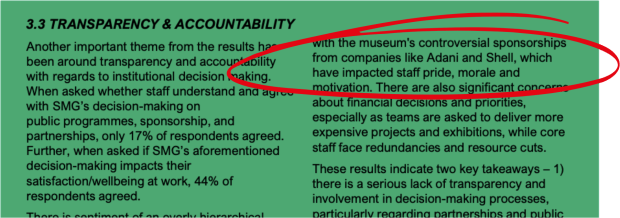
An internal survey conducted by the Prospect union, which represents many curators and other workers at the Science Museum Group, had also highlighted growing unease and opposition among the workforce to the Museum’s controversial stance on fossil fuel sponsorship.
A spokesperson for Culture Unstained, which campaigns against fossil fuel sponsorship of culture, has said:
‘BP’s commitment to climate action was never worth the paper it was written on but the Science Museum’s Director passionately championed his partnership with the major polluter year after year. Now, with the world facing droughts and wildfires and BP recklessly ramping up its production of dirty fossil fuels, the Museum has finally come to its senses and followed the rest of the culture sector in cutting ties to BP.
This comes after years of campaigning and growing pressure from educators and schools pledging to boycott trips to the Museum while it defended its polluting partnerships. But today represents only a partial victory – the museum is yet to fully turn its back on dirty fossil fuel money and must now bring to an end its indefensible sponsorship deal with Adani, the world’s biggest private producer of coal – and a producer of weapons used in Israel’s genocidal attacks on the Palestinian people.’
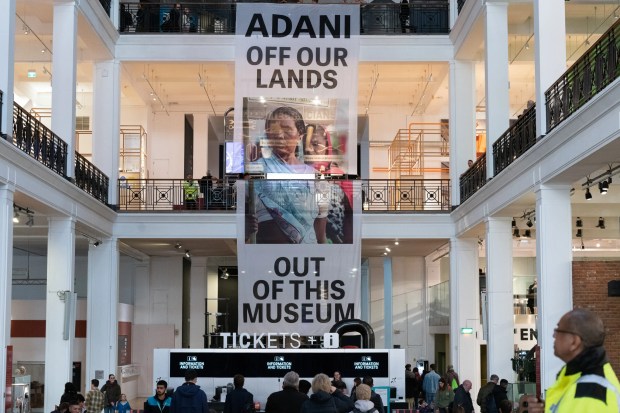
Banner reading “Adani off our lands, out of this museum” hanging from the Science Museum’s gallery. Photo: Ron Fassbender
BP’s relationship with the Museum goes back almost 25 years with it sponsoring – and having a central role in shaping the content of – the Museum’s former Energy Gallery. BP subsequently sponsored an exhibition on the Cosmonauts, which gave BP a platform for promoting the stake it then held in the Russian state oil company Rosneft.
Ian Blatchford was awarded the Pushkin Medal by Vladimir Putin for his role in hosting the BP sponsored Cosmonauts exhibition.
BP was the founding sponsor of the ‘Science Museum Group Academy’ which trained educators and teachers in the delivery of STEM. Despite the Museum claiming that BP was merely a funder of the project, Freedom of Information (FOI) disclosures made public earlier this year revealed how BP had had an ‘insidious influence’ over the original research underpinning the project, with the company having the ability to veto key decisions about the project’s direction.
Daniel Selwyn, a geography teacher and member of the NEU campaign to support the boycott, has said:
“We are delighted to hear that the Science Museum is dropping its sponsorship with BP, which has been a shameful stain on its reputation for too long. This summer holiday from school has been defined by apocalyptic scenes of glacial collapses, droughts, heatwaves and wildfires. Evidently it has finally become untenable for the Science Museum to partner with one of the primary arsonists of the climate breakdown we are facing. This victory has only happened because of the persistent and principled resistance of students, teachers, scientists and the wider community who know that we deserve public institutions that promote life, learning and liberation, not warfare and ecocide.
If the Science Museum was truly committed to our existential struggle for a habitable planet, it would also immediately drop the sponsorship of the world’s largest private coal company Adani, which also supplies drones to the Israel while it commits a genocide in Palestine. We will continue to oppose this collaboration, as educators, trade unionists, and ordinary members of the public, until Adani’s dirty money is also dropped.”
Internal documents from BP made public last year also reveal how the company’s corporate sponsorship arrangements were part of its cynical influence strategies, a means for securing the backing of cultural and political figures who could then act, in BP’s own words, as its ‘enablers and defenders’.
The Science Museum’s Director Ian Blatchford has repeatedly defended BP and his stance on fossil fuel sponsorship, including inviting the company to come and present to Museum staff and Trustees, despite numerous benchmarks and reports highlighting how BP’s business plans ran in direct opposition to a liveable climate.
The Science Museum’s own Sustainability Policy requires sponsors to be on a pathway in line with the goals of the Paris Climate Agreement, as assessed by the Transition Pathway Initiative (TPI). While BP says it aims to achieve net zero by 2050, recent research by TPI is clear that BP’s goals are not backed up by its investments and business plans. BP was one of 11 companies assessed in the research, with TPI noting that:
“Companies frequently disclose their climate ambitions and emissions targets. However, far less often do they disclose quantified, time-bound and sufficiently resourced plans showing how those ambitions will be delivered. In the oil and gas sector, there is little clear evidence that companies plan to transition away from fossil fuels towards climate solutions at the required pace.”
In October the Museums Association ratified a new Code of Ethics calling for the sector to ‘transition away’ from sponsorship deals with polluting fossil fuel companies, and from organisations involved in environmental harm and human rights abuses.
The Science Museum has faced enormous pressure over the last decade over its ties to BP and other fossil fuel producers, with exhibition contributors, leading academics, scientists, educators, young people, and Indigenous leaders all calling on the Museum to end these partnerships. In 2021 two of its trustees resigned from the Board of Trustees over its stance on fossil fuel sponsorship and, as one of them, Dr Hannah Fry, explained in The Times, its unwillingness to engage with “reasonable voices calling for change.” The Museum’s former director Professor Chris Rapley also resigned from the Science Museum’s Advisory Board over its fossil fuel partnerships.
In 2024 the Museum was forced to end its relationship with Norwegian oil and gas company Equinor, after the company’s business plans failed to align with the Paris Climate goals and therefore breached the Museum’s Sustainability Policy.
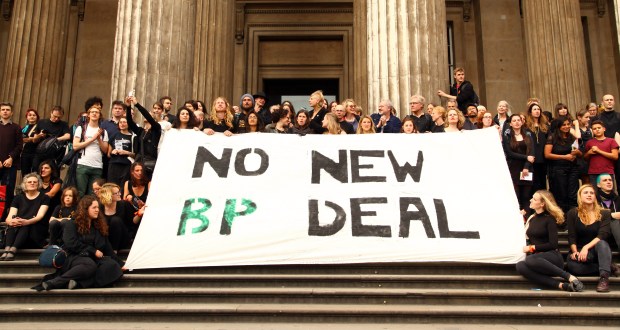
Despite the shift away from BP sponsorship in the arts, The British Museum signed a new 10-year sponsorship deal with BP in 2023 amidst huge controversy which will see the company pay £50 million over 10 years in order to continue its partnership with the beleaguered cultural institution. Protests against the partnership have continued as well as scrutiny over how the Museum’s Board of Trustees reached a decision to extend the relationship in spite of the clear evidence of BP’s dire record on climate change, environmental pollution and human rights.







2 thoughts on “Science Museum drops oil sponsor BP after mounting pressure on controversial partnership”