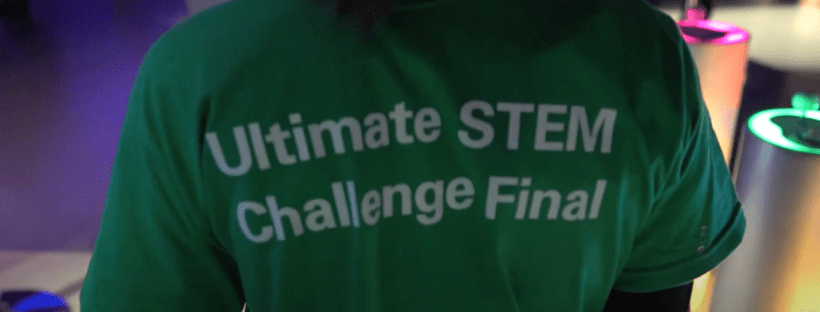
- Documents obtained under FOI show how BP funded and influenced the research project that led to the creation of the Science Museum’s “Science Museum Group Academy”, a training academy for STEM educators.
- Academy and other STEM initiatives designed to give children a “BP context for their learning”, according to unearthed parliamentary submission
- Revelations include a contractual clause giving BP the power to veto ‘major decisions’ within the collaboration and mandating BP to “set out the distinctive characteristics of [programme].”
- Emails show BP reaching “target audience [of] policymakers” in communications surrounding the Academy’s development.
- The National Education Union’s International Solidarity Officer says more teachers are questioning whether they should participate in the Science Museum Academy “whose curriculum was developed with oversight from very people who are causing climate change – BP.”
New documents have been made public revealing BP’s disturbing influence and involvement in STEM education projects mounted by London’s Science Museum. Materials disclosed under Freedom of Information (FOI) rules show how the oil and gas company chaired and had the power to veto decisions for a major research project which now forms the basis of the BP-sponsored ‘Science Museum Group (SMG) Academy’ for training teachers and educators in STEM.
Pressure has been mounting on the museum’s relationship with BP after an educators’ boycott was launched last year, citing BP’s climate impacts as well as its profiting from genocide by supplying fuel to the Israeli military.
The previously unpublished FOI disclosures reveal BP’s direct influence over ‘Enterprising Science’, the foundational research project undertaken with King’s College London.
The outcomes from that research project now form the basis of the Science Museum’s ongoing SMG Academy for teachers and educators – which BP now sponsors as well. They show:
- that BP would chair the ‘Management Group’ and major decisions would not be “validly passed…unless the representative of BP votes in its favour”;
- that far from acting as a hands-off funder of the research, the agreement specified that BP would “set out the distinctive characteristics of [the Enterprising Science Project] which Science Museum and KCL may not duplicate”;
- the extensive reach of the BP-sponsored SMG Academy to educators and pupils and the tangible benefits sold to BP as the sponsor of the SMG Academy, such as a dedicated ‘BP Family Day’ at the Museum;
- how the Museum explicitly offers to support BP’s objectives through their SMG Academy sponsorship, with Museum staff writing to BP last year that they “would love the opportunity to meet in person and gain a deeper understanding of your organisation’s goals and objectives, particularly around The SMG Academy.”;
- BP openly states in a past parliamentary briefing that one of its ‘desired outcomes’ of the project – alongside BP’s other STEM initiatives – is to provide pupils with ‘industrial and BP context for their learning’.
On the FAQs webpage for ‘Energising Futures’ – the new brand for what was previously the ‘BP Education Service’ (BPES), which promotes the company’s own STEM resources and events – BP makes the motivations for its involvement in STEM explicit, saying: “Why does bp invest in education? bp want to support the STEM skills development needed to create a diverse, high-quality talent pipeline for the future.”
Chris Garrard, Co-Director at Culture Unstained which obtained the FOIs, said:
“What makes these findings all the more disturbing is that BP’s agenda was actively supported by publicly-funded educational institutions – the Science Museum and KCL – even when it was clear that BP was using these STEM projects to secure meetings with government departments, develop communications materials directed at policy-makers and, ultimately, to contaminate the curriculum with a corporate-friendly framing of STEM that would support BP’s own business. Education should never be up for sale to major polluters.
“BP has said how projects such as the Science Museum Academy are also about creating a ‘talent pipeline for the future’, but with young people refusing to lend their talents to fossil fuel producers and students barring them from their recruitment fairs, the industry is facing a recruitment crisis. So, whose side is the Science Museum really on when it backs BP?”
The assertion that BP’s lobbying strategy is assisted by the Science Museum is consistent with disclosures of BP’s internal documents made last year in which BP set out cultural sponsorship as a means to mitigate the potentially harmful impact of “detrimental policy and political developments” by “leveraging our distinctive position as a champion of STEM education”. The new disclosures show emails referring to the creation of animations ‘aimed at policy makers’, and of meetings with BEIS and the Department for Education in the context of developing the Academy.
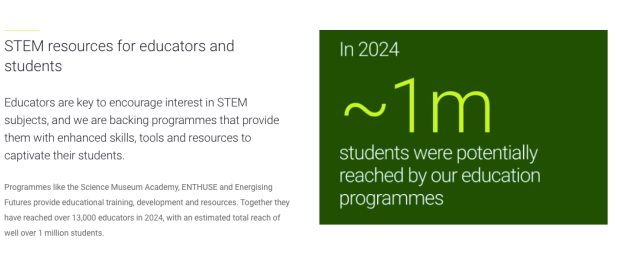
Campaigners also point to a formal submission made by BP to a UK Parliamentary Committee in 2017 which they say reveals another motivation for BP’s involvement in STEM education. In the submission, BP states that one of the ‘desired outcomes’ of its involvement with the Science Museum and other STEM initiatives – is to provide pupils with ‘industrial and BP context for their learning’.
Responding to the disclosures, Stuart Tannock of the UCL Institute of Education commented:
“Back in the early 1980s, BP explicitly stated that its aim in engaging with STEM education in the UK was to “exercise” its “influence” in order to “achieve developments in education which will help industry and commerce in general, and BP in particular, operate efficiently in the future.” This remains as true today as it was forty years ago.
“The linking of the BP brand with good STEM research and education … serves to obscure the fact that this is one of the companies most responsible for causing the climate crisis that has devastated and will continue to devastate communities around the world – a company that remains committed to fossil fuel production for the foreseeable future. This repackages BP from a force for harm to a force for good in the world and helps it acquire and retain a social licence to operate.”
Campaigners point to recent evidence of sponsored institutions promoting BP’s false narrative that it is “addressing the climate challenge”, with both The British Museum and the Science Museum recently providing positive comments about BP after the company announced a ‘reset’ abandoning its ‘net zero’ goals and pledging to extract yet more oil and gas. Amid widespread condemnation of BP’s decision, a Science Museum spokesperson called BP’s sponsorship: “vital to our mission to inspire millions of people every year”.
In November, Green Party leader Zack Polanski intervened on the issue of fossil fuel sponsorship, calling out “vested interests” at the Science Museum:
“Basic science starts with the right information, and you can’t have the right information with vested interests. BP and Adani have no place in our Science Museum and we need to get them out.”
In addition to the over 400 teachers and scientists who pledged to boycott the Science Museum in 2022, since July 2025, a boycott supported by the National Education Union has urged teachers and schools to ‘press pause’ on school trips to the Science Museum and to seek alternative science centres until its sponsorships with BP and coal producer Adani are dropped.
BP was named in a recent UN report as being complicit in the illegal occupation of Palestine and the ongoing genocide as one of Israel’s largest suppliers of crude oil, which includes providing fuel to the Israeli military. BP has also been granted gas exploration licences in Palestinian waters.
As well as BP, the Science Museum Group also takes sponsorship from Adani Green Energy, a subsidiary of coal giant Adani, the world’s biggest private producer of coal which is continuing to expand its extraction, violating Indigenous rights in the process. Adani is also involved in the production of drones used against Palestinians as part of its collaboration with the Israeli weapons company Elbit Systems.
A further wave of action in recent months has seen 30 schools effectively ruling out Science Museum school trips, according to organisers Parents for Palestine and Education Climate Coalition, who have supported over 500 parents to organise letters to urge their children’s schools to join the boycott.

Helen Tucker, an International Solidarity Officer at the National Education Union (NEU) and a Green Party councillor, said:
“As teachers, we should ask ourselves whether we can, in good conscience, participate in the Science Museum Academy whose curriculum was developed with oversight from the very people who are causing climate change – BP, or show our students a gallery on the climate crisis by a coal producer – Adani. Helping BP and Adani to pull the wool over our eyes is not contributing to our children’ s education but is doing them a grave disservice. As educators, it is our responsibility to resist the greenwashing and the image laundering of those destroying our children’s futures – we all have too much to lose. The NEU will continue to support the boycott of the Science Museum until this publicly funded institution learns how to train STEM educators without allowing fossil fuel producers to profit from it.”

In October, the UK-wide membership organisation the Museums Association passed a new Code of Ethics which expects museums to transition away from fossil fuel sponsorship and those implicated in human rights abuses. The Science Museum has yet to issue a response.
Since 2016, BP’s sponsorship deals with the Royal Opera House, Royal Shakespeare Company, National Portrait Gallery, Tate and the Scottish Ballet have all been ended as opposition to its sponsorship of the arts grew rapidly among artists, performers, workers and activists. However, BP’s new 10-year sponsorship of The British Museum, announced in 2023, and its ongoing partnership with the Science Museum for its STEM Academy have allowed the company to continue accessing influential networks and securing public support from the leadership of these taxpayer-funded cultural institutions.
Notes
- The schools joining the boycott have chosen to remain anonymous. Figures can be confirmed via Parents for Palestine and Education Climate Coalition.
- All sources: https://cultureunstained.org/bp-science-museum-group-academy/
 Culture Unstained