
In a significant shift for the culture sector, museums and galleries in the UK this evening voted to adopt ambitious new ethics rules that call for the sector to ‘transition away’ from sponsorship deals with polluting fossil fuel companies, and from organisations involved in environmental harm and human rights abuses.
The Museums Association’s new ‘Code of Ethics’ was formally adopted at its AGM this evening when the motion to ratify it was passed with a large majority of 91%. It is believed to be the first time – potentially in the world – that a sector-wide ethics code has indicated that partnerships with specific sectors of industry like fossil fuels cross an ethical red line.
Today’s vote ramps up the growing pressure on The British Museum, which signed a new 10-year partnership with oil giant BP in 2023, and the Science Museum Group, which is also sponsored by BP as well as the coal and weapons producing conglomerate Adani.

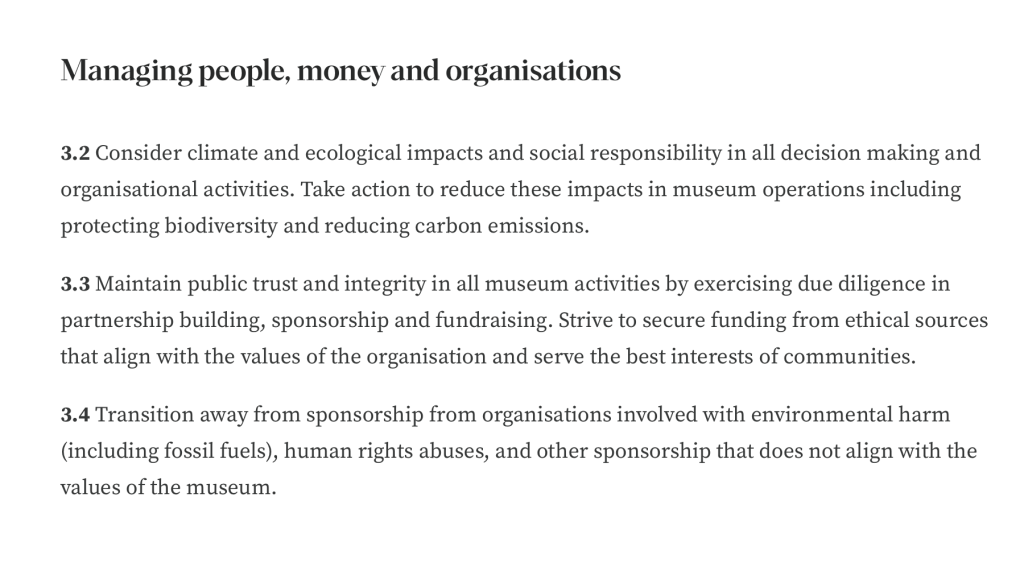
The Code, which was last updated in 2014-15, now sets out how museums should:
‘Transition away from sponsorship from organisations involved with environmental harm (including fossil fuels), human rights abuses, and other sponsorship that does not align with the values of the museum.’
And:
‘Strive to secure funding from ethical sources that align with the values of the organisation and serve the best interests of communities.’
It also expects museums to:
‘Consider climate and ecological impacts and social responsibility in all decision making’.
A spokesperson for Culture Unstained has said:
“Many cities and municipalities around the world have begun to bring in bans on fossil fuel advertising and sponsorship – but this is potentially the first time that a culture sector body has adopted such a clear position against fossil fuel funding and sponsors linked to human rights abuses. It ramps up the pressure on those such as The British Museum and Science Museum – whose leaders continue to vocally defend their polluting sponsors – to now chart a course away from oil giant BP and coal miner Adani, corporations that are also profiting from the ongoing genocide in Gaza.
Crucially, this new Code does not represent a slippery slope to shunning all sponsors but shows that there is a distinction to be made between genuine philanthropy and toxic corporations seeking to artwash their brands. It makes clear that the ethical questions around how a museum funds its work are inseparable from those that shape their programmes, exhibitions and day-to-day operations.”
In 2023, The British Museum announced that it had signed a new 10-year partnership with BP for £50 million and continues to partner with Japan Tobacco International. Last month, The British Museum told The Times that it intended to “balance” its financial needs and considerations against “any new guidance” from the Museums Association.

Protesters take part in a creative action against BP sponsorship of The British Museum. Photo: Ron Fassbender.
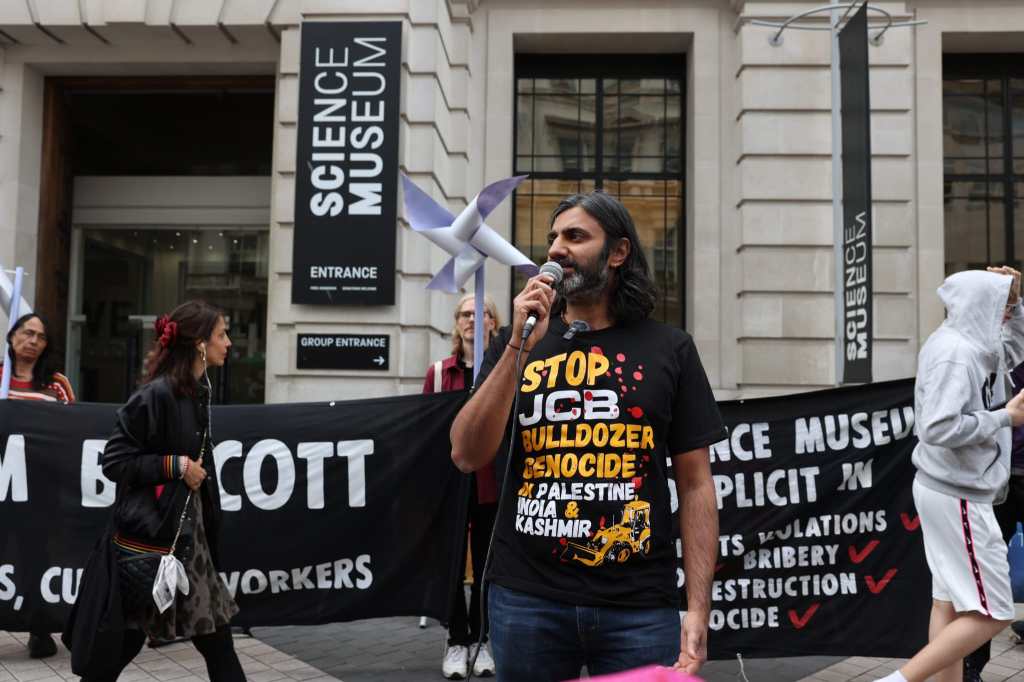
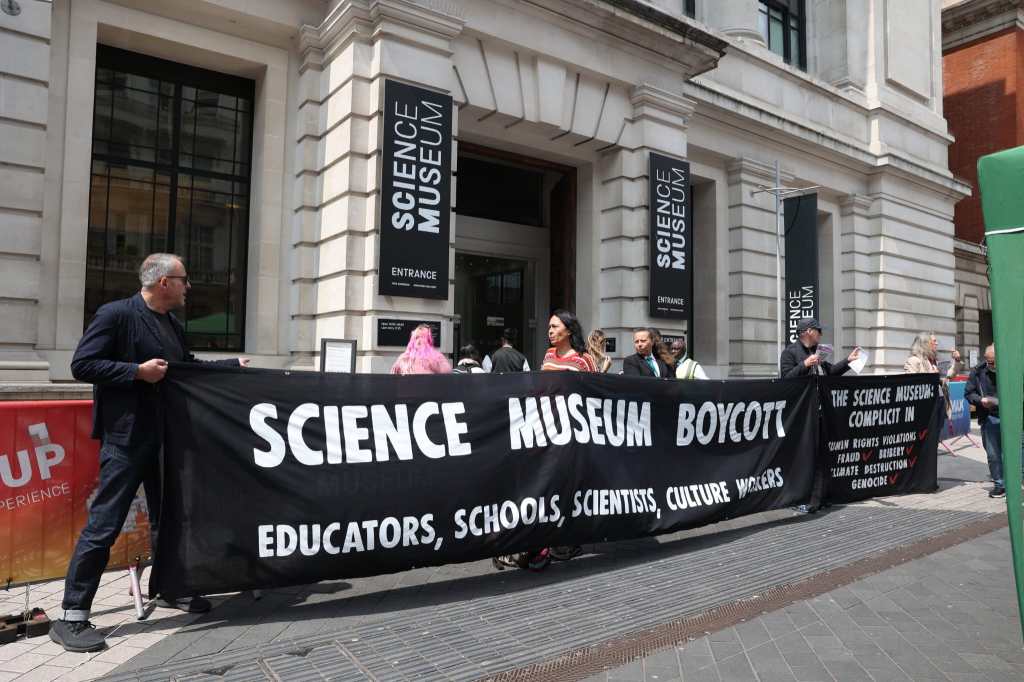
Meanwhile, the Science Museum Group also takes sponsorship from BP, as well as the coal giant Adani, the world’s biggest private producer of coal which is continuing to expand its extraction, violating Indigenous rights in the process. Adani is also involved in the production of drones used against Palestinians as part of its collaboration with the Israeli weapons company Elbit Systems.
BP was also named in a recent UN reports as being complicit in the illegal occupation of Palestine and genocide in Gaza as one of Israel’s largest suppliers of crude oil, which includes providing fuel to the Israeli military. BP has also been granted gas exploration licences in Palestinian waters.
Bridget McKenzie, co-founder of Culture Declares Emergency and also the founder of Climate Museum UK, has said:
“In Culture Declares Emergency we are very encouraged to see the Ethical Code as it gives weight to our emphasis on the systemic injustices that lie behind the Earth Crisis. Environmental Responsibility for cultural organisations is primarily about ethics and about changing the dominant narrative from exploitation to care. Extractive companies have had far too much power to shape this narrative, and museums should be freeing themselves from being used for those purposes.”
The new Code of Ethics was the outcome of an extensive consultation process with museums in the UK and, alongside new standards on sponsorship, it also includes significant new additions around approaches to anti-racism, decolonisation and worker rights, reflecting a shift in museums practice over the past decade. On worker rights, it sets out how museums should:
“Value the workforce, including staff, volunteers and freelancers, by ensuring fair pay, benefits and conditions. Foster a positive workplace culture to promote wellbeing…”
And:
“Commit to workforce diversity to improve the work of the museum and better represent the communities the museum serves.”
Hannah David, President of the PCS Culture Group, which represents PCS Union members who work at national museums and galleries, has said:
“We are pleased to hear the Museums Association hosted its annual 2025 conference at St Fagans, a fitting venue for cultural workers to come together and reflect on the future of ethical practices in the sector.
PCS members have long supported the campaign to end fossil fuel sponsorship in the culture sector. As such, we welcome the adoption of the new Code of Ethics as a meaningful step towards aligning the sector with our broader commitment to climate justice.
We are particularly encouraged by the inclusion of principles on fair pay, working conditions, and inclusive recruitment. We believe this new Code of Practice provides a robust framework for improving our workplaces, boosting staff morale, and holding decision-makers to account.
However, the adoption of this Code is merely the beginning. It is now our collective responsibility to ensure these principles are embedded in policy, enacted in daily practice, and used to challenge exploitation wherever it exists. Ethical commitments must be more than symbolic, leading to lasting and transformative change across the culture sector.”
Last month, The Times reported how the Museums Association, “which lobbies for the sector as well as providing grants and helping facilitate loans between institutions” has previously “expelled members in the past for failing to follow its code of ethics”, although “expulsions have usually only happened after an institution has sold some of its collection for commercial gain.” In additional information supporting the new Code, the Museums Association says that it “believes this code’s provisions to be in the best interests of the sector and the public and therefore urges all museum governing bodies…to respect it.”
The newly adopted ‘Code of Ethics’ also advises that museums should:
‘Ensure organisational integrity by resisting attempts from corporations, funders and governments to unduly influence practice and strategic decision making to fulfil their own private or political interests.’
Earlier this year, documents disclosed by the Cabinet Office following a First-Tier Information Tribunal undertaken by Culture Unstained, revealed how the Science Museum had brokered a meeting for its sponsor Adani with then Prime Minister Boris Johnson, as the company sought to strengthen its ties to the UK and bolster its energy and defence business. The Museum’s Director, Ian Blatchford had pitched the opportunity to sponsor the museum’s new climate and energy gallery to Adani as “a global profiling opportunity”.

Since the Code of Ethics was last updated in 2014-15, many museums, galleries and other cultural organisations have phased out partnerships with polluting fossil fuel companies, including Tate ending its 27-year sponsorship deal with BP in 2016 and the National Portrait Gallery then ending its 30-year partnership with BP in 2022, following opposition from artists, workers and activists. In 2019, many major museums and galleries cut ties to funding from the Sackler Family over their involvement in the US opioid crisis and the misleading promotion of the drug OxyContin, and following a campaign by the artist Nan Goldin and activist group Sackler PAIN.
While the newly adopted Code of Ethics offers ‘a guide to best practice’, it suggests an appetite in the culture sector for adopting stronger ethical standards on corporate sponsorship. It also represents a new ethical standard for other sector-wide bodies to take note of, including the government, which during a parliamentary debate in July on a proposed ban on fossil fuel advertising and sponsorship indicated that it had no plans to introduce any such restrictions.
 Culture Unstained